
New website for a new startup
Built to rank and gain traction in the SERPs
Ellipsis Land & Planning website designed and built to reflect their experience
Ellipsis Land & Planning is a specialist UK land, planning and project management consultancy delivering large-scale residential developments across the country.
They came to us needing a website that properly represented the business – one that reflected 25 years of experience in a competitive sector and gave developers, land promoters and investment consortiums a clear reason to get in touch.

A consultancy with 25 years of experience deserves a website that says so – clearly, confidently, and to the right people.
The brief
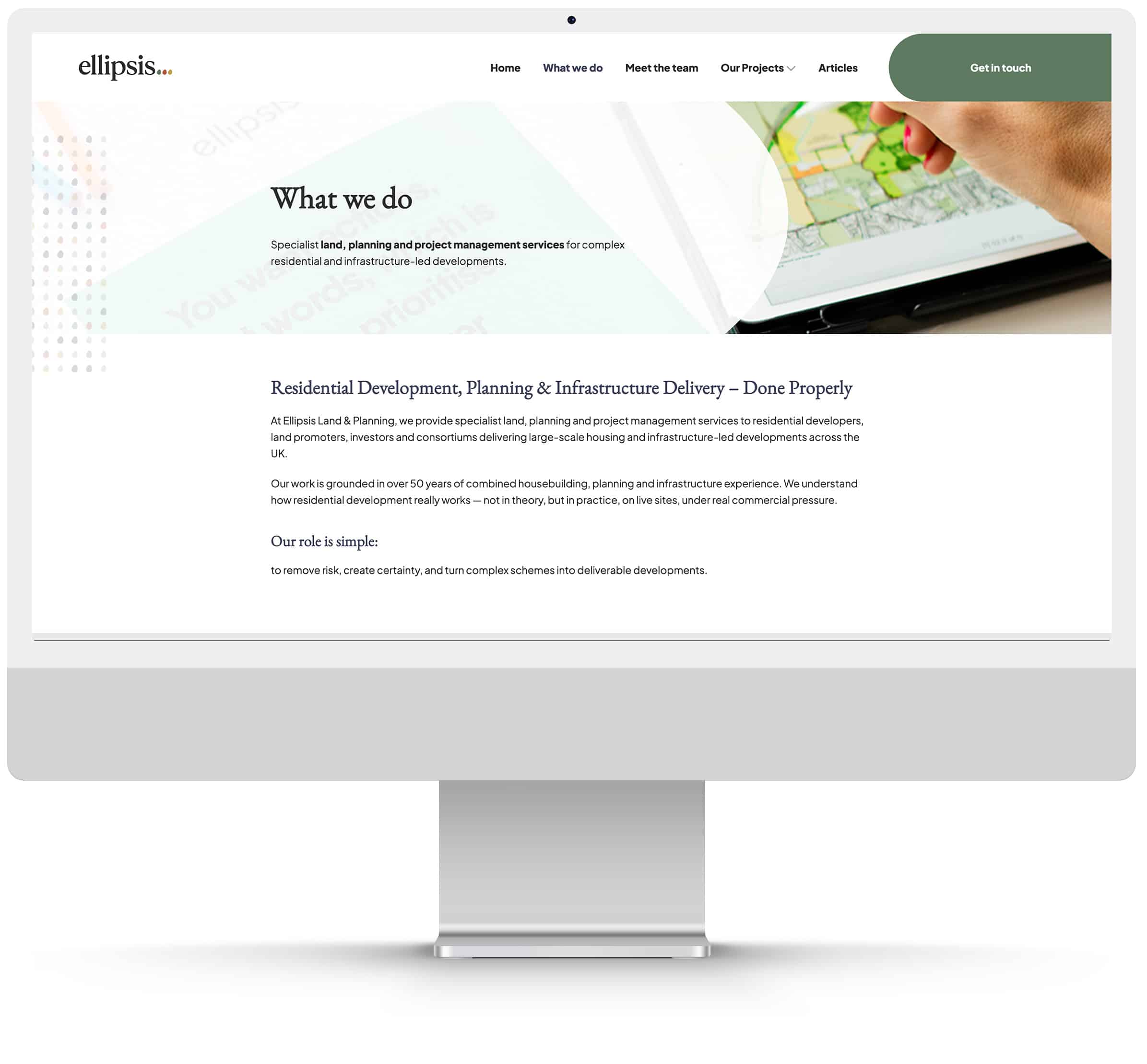
Ellipsis works on some of the most complex residential development projects in the UK – Sustainable Urban Extensions, multi-developer consortium sites, large phased infrastructure-led schemes. The work is serious, the clients are sophisticated, and the website needed to reflect that.
The brief was to build a site that clearly communicated what Ellipsis does, who they do it for, and why their experience matters – without resorting to the kind of vague, corporate language that fills most consultancy websites and says nothing at all.
The website
The site is a fully custom WordPress build on our bespoke theme. No page builders, no off-the-shelf templates, no Elementor. Every template and content block was built by hand, which means the code is clean, the site loads fast, and Ellipsis owns something built to last.
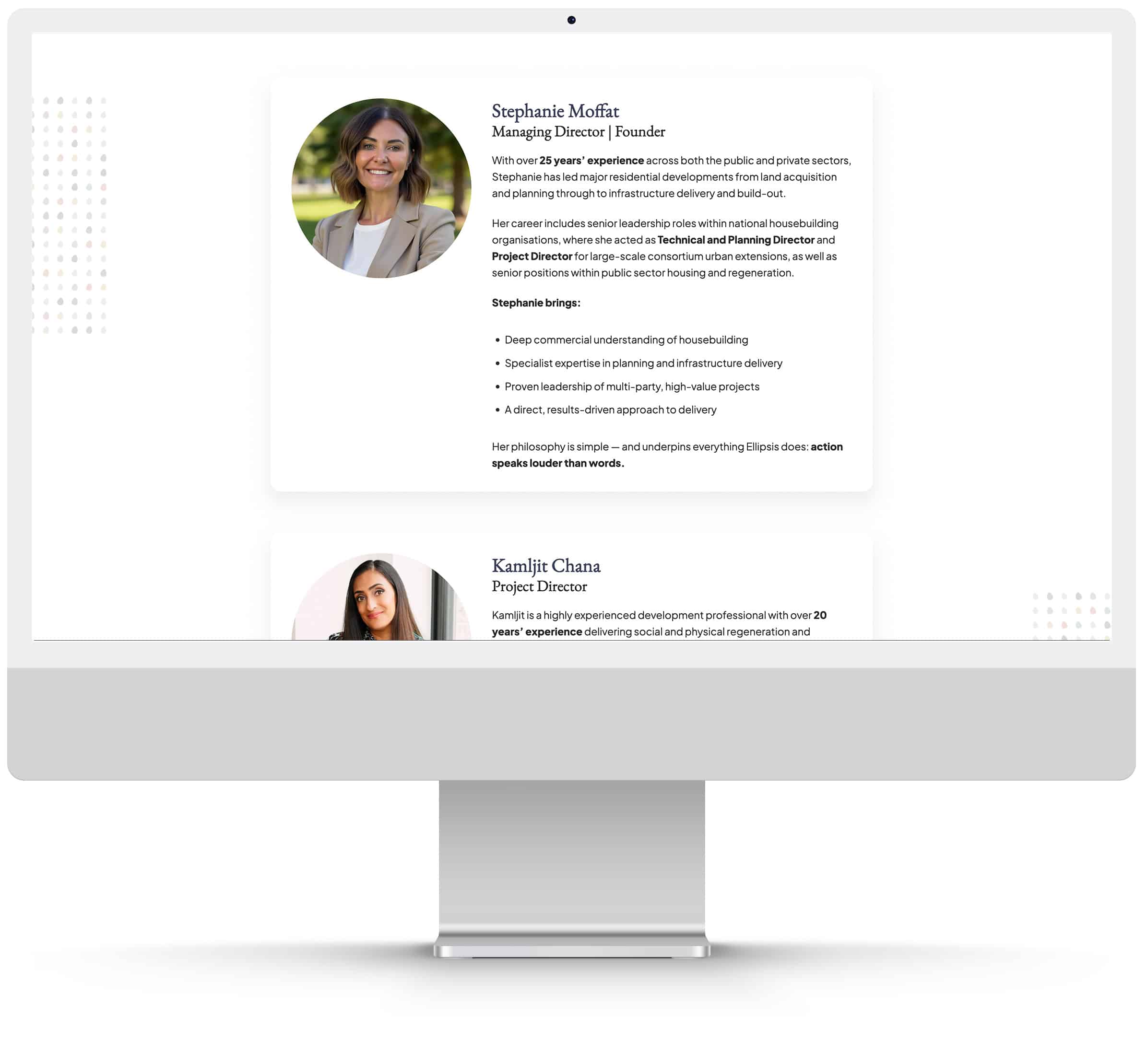
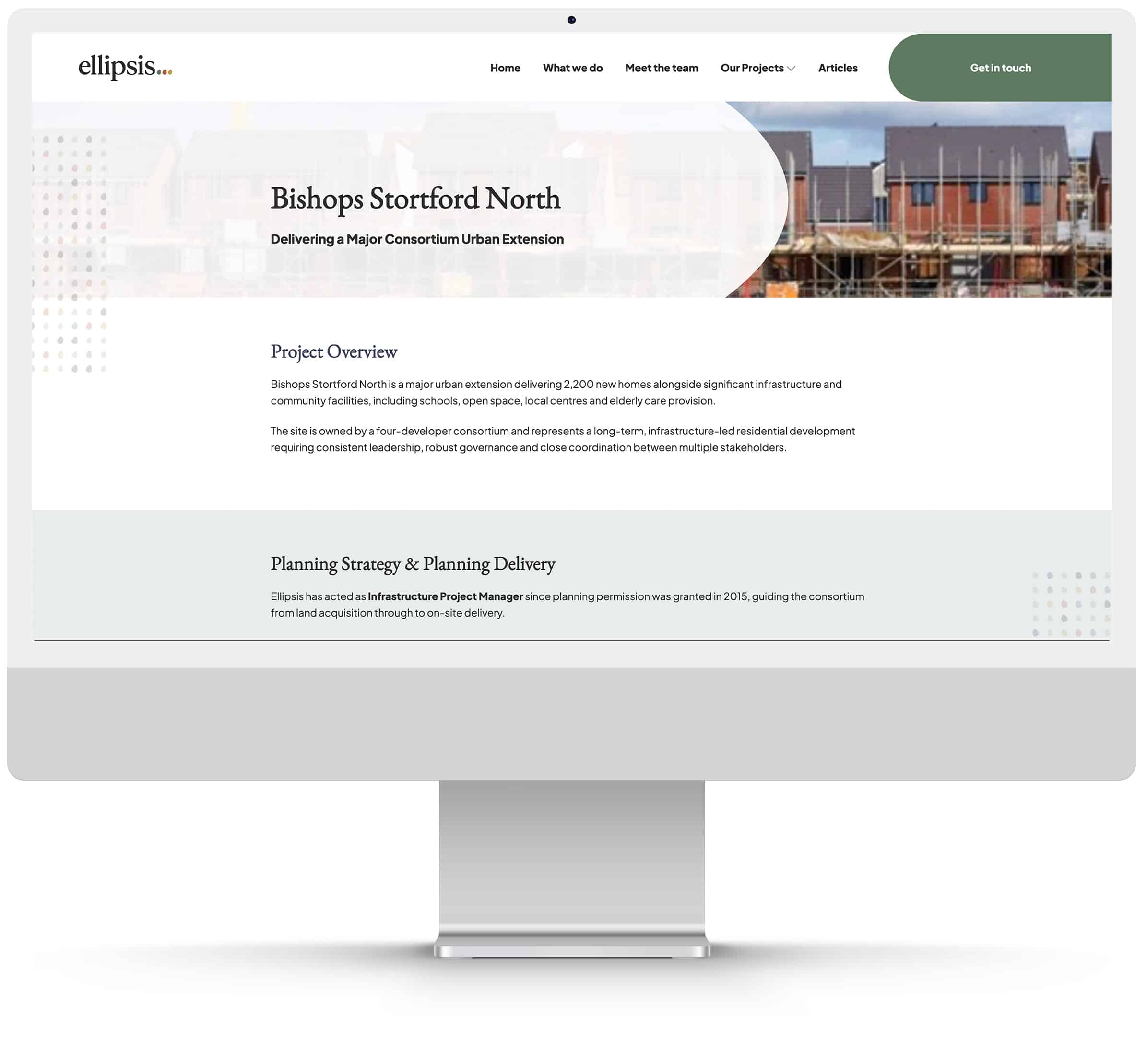
We designed and built the full page set: home, what we do, meet the team, our projects (with individual pages for their major schemes at Bishops Stortford and Langley), articles, and contact. The projects section was particularly important – Ellipsis’s track record on large, long-term schemes is one of their strongest selling points, and the site needed to give that evidence the space it deserves.
On-page SEO was set up at launch. The site scores well in Google’s PageSpeed tests and was structured from the start to support ongoing content through the articles section.
The challenge
Land and planning consultancy is a crowded space, and a lot of the websites in this sector look the same – stock photography of handshakes, dense paragraphs of service descriptions, and no real sense of who is behind the business or what makes them different.
Ellipsis’s edge is their depth of experience on genuinely complex, large-scale schemes and the fact that they operate as an extension of the developer’s own team rather than a detached consultancy. The site needed to communicate that difference without just saying it.
The outcomes
What does all this mean for the business?
Ellipsis now has a website that reflects the scale and quality of the work they do. The site is indexed, findable, and structured so that Google understands exactly what the business does and who it serves – housebuilders, land promoters, investors and development consortiums looking for a specialist project management partner on large residential schemes.
For a consultancy that wins work through reputation and relationships, the website now backs that reputation up. When a prospective client searches for Ellipsis, or for residential development project management specialists in the UK, the site gives them something credible and authoritative to land on.
The project pages for Bishops Stortford North and Langley Sustainable Urban Extension do something most consultancy websites never bother to do: they show the actual work. Developers evaluating a potential partner want evidence of experience at scale. Those pages provide it.
For a business where one new client relationship can be worth years of fees, having a professional, fast, properly built website is not overhead. It is infrastructure.
The articles section gives Ellipsis the platform to build topical authority over time – publishing expertise on planning, infrastructure, consortium management and residential delivery. That content compounds. Each article that answers a question a developer might search for is another route into the site, another signal to Google that this is a business that knows its subject.
The foundations are in place. The site is built to grow with the business.
For a business where one new client relationship can be worth years of fees, a properly built website is not overhead. It is infrastructure.
